A team from the Michigan DNR, EGLE, and Michigan State University look for red swamp crayfish in burrows. Red swamp crayfish will be featured in the November 17, 2020 webinar, “Delicious but Dangerous.” Photo courtesy of Michigan’s Invasive Species Program and EGLE.
Read moreSummer Update 2020


Donation of 198 Acres at Gratiot Lake

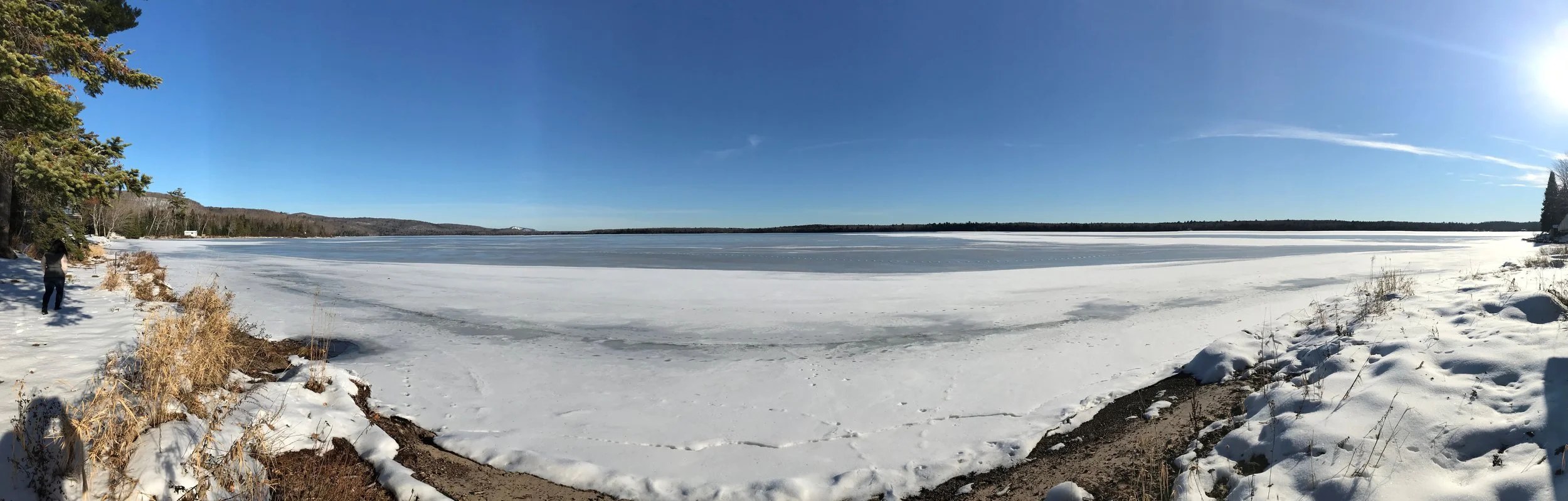
In July, Lizzadro Farms Inc. donated additional land to GLC. The 198 acre parcel is indicated on the map below as the gray area in section 4 at the northern tip of the lake. This new GLC land adjoins “Sandy Beach” (the gray area in section 3 below) which was donated to GLC in 2018.
The wooded parcel includes the mouth of Sucker Creek and approximately 3,500 feet of mostly cobble shoreline. Sucker Creek is a high quality feeder stream to Gratiot Lake. Historically, Sucker Creek is known to anglers and eagles alike as a location for springtime smelt and white sucker runs. These fish swim up freshwater streams to breed.
While much of Gratiot Lake is underlain by Jacobsville sandstone, this forested slope steeply rises from the lake on volcanic basalt bedrock. The Keweenaw Fault runs through it, under the tip of Gratiot Lake, and towards Lac LaBelle. The wooded slope meets the narrow shoreline near the lake’s deepest hole (over 70’ in depth). It is hypothesized that during the last Ice Age a glacier rose as much as two miles above the bedrock here and created the deep “plunge pool” as its melt cascaded and scoured into the basin that is now Gratiot Lake.
Water's Edge Fall 2019

The Best Offense is an Observant Defense: Aquatic Invasive Species
In lieu of the exciting results of the Exotic Aquatic Species Watch completed for the Cooperative Lake Monitoring Program in 2018, it is imperative to keep Gratiot Lake free of aquatic invasive species. The watch found no aquatic invasive plant species in Gratiot Lake! The best way to take on aquatic invasive species is to prevent them from colonizing in the first place.
The Michigan Department of Natural Resources (MiDNR) recently amended the Natural Resources and Environmental Protection Act (Act 451 of 1994) Part 413 with changes for boaters and anglers that take effect March 21, 2019. The changes are intended to better protect waterways from the introduction and spread of aquatic invasive species.
For more information, click the link below:
https://www.michigan.gov/invasives/0,5664,7-324-68071_91899---,00.html?utm_source=govdelivery
Key Changes for Boaters:
All of the following must be completed prior to transporting watercrafts over land:
Removing all drain plugs from bilges, ballast tanks, and live wells.
Draining all water from any live wells and bilges.
Ensuring the watercraft, trailer, and any conveyance used to transport the watercraft or trailer are free of aquatic organisms, including plants.
Key Changes for Anglers:
A person shall not release baitfish in any waters of this state. A person who collects fish shall not sue the fish as bait or cut bait except in the inland lake, stream, or Great Lake where the fish was caught, or in a connecting waterway to the body of water if the fish could freely move between the original location of capture the location of release.
A person, who catches fish other than baitfish in a lake, stream, Great Lake, or connecting waterway shall only release the fish in the lake, stream, or Great Lake where the fish was caught, or in a connecting waterway of the body of water where the fish was caught if the fish could freely move between the original location of capture and the location of release.
Below is a diagram (from the MiDNR) for how to correctly inspect and drain your watercraft:

2018 Cooperative Lakes Monitoring Program

2018 Cooperative Lakes Monitoring Program Report for Gratiot Lake
Read more2017 Cooperative Lakes Monitoring Program Report
Gratiot Lake Conservancy (GLC), in conjunction with some lake locals, collects data points annually to contribute to the Cooperative Lakes Monitoring Program (MiCorps). GLC has been providing data since 1999 to the program and is excited to continue to in the future.
MiCorps is a network of volunteer water quality monitoring programs in Michigan. It was created through Michigan Executive Order #2003-15 to assist the Department of Environmental Quality (DEQ) in collecting and sharing water quality data for use in water resources management and protection programs. To learn more about them click here: About MiCorps .
The 2017 report indicates Gratiot Lake is a 36 on the Trophic Scale Index, a metric used to evaluate the productivity, quality, and condition of a lake. The 36 places Gratiot Lake between an Oligatrophic Lake (think a barren, not very productive lake) and a Mesotrphic lake (medium amount of aquatic life and relatively productive). Given the size of Gratiot Lake, this ranking makes sense and is a good indicator of a healthy lake.
It is important to continue these measurements in order to monitor the condition and quality of the lake. If Gratiot Lake starts moving to a higher or lower number (scale is 0-100), it could indicate a potential problem or threat to the lake’s ecosystem and food web.
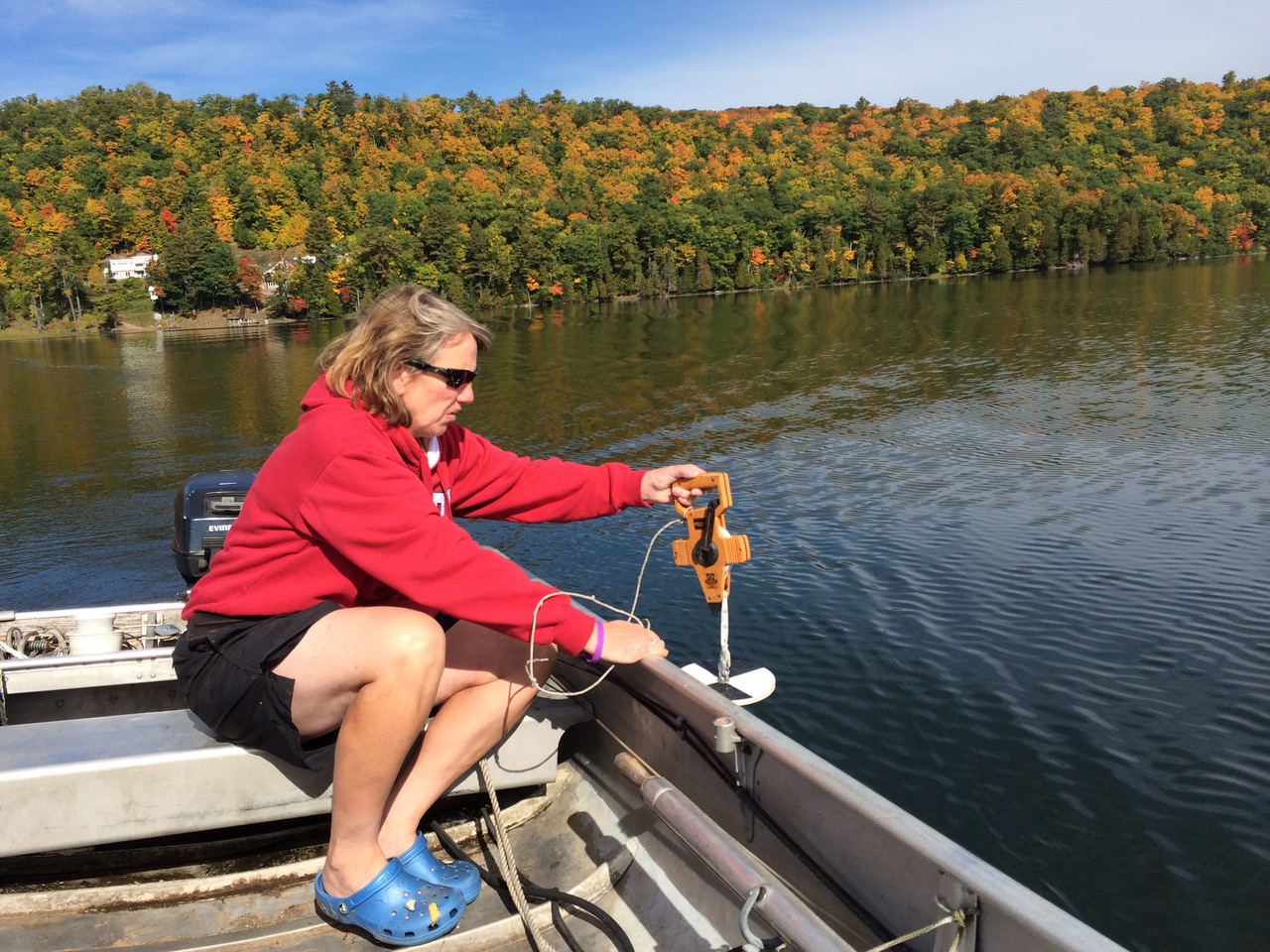
Dorothy Jamison taking Secchi Reading at Gratiot Lake in 2014
